
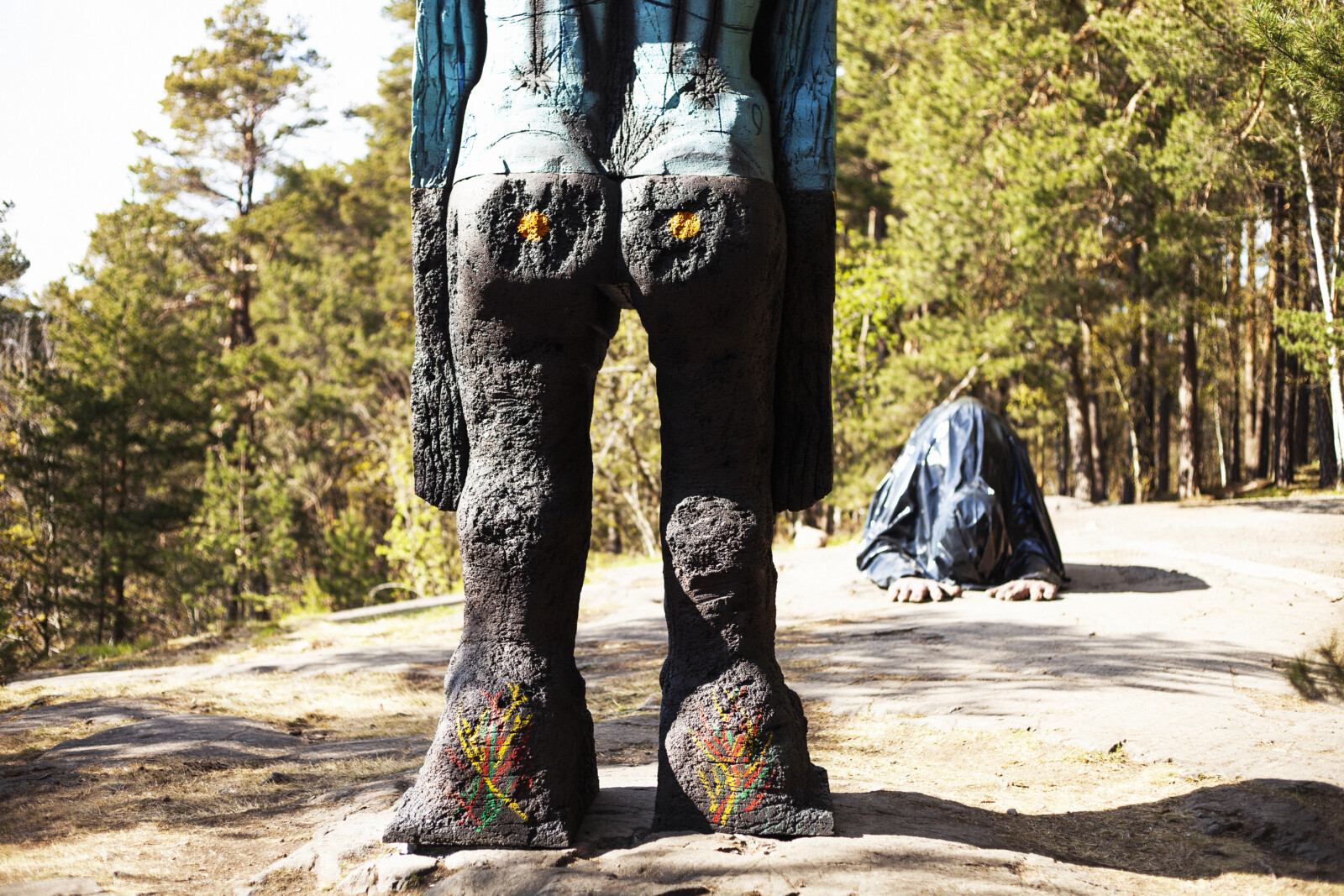
We Come in Peace
- Datering 2018
- Avduket 2021
- Materiale Malt og patinert bronse
- Mål 417 x 122 cm / 525 x 140 cm
«I don’t find my figures unsettling – quite the opposite, as I feel they are comforting and friendly. Sculpture should challenge and also be available to all with art outdoors in the public realm.»
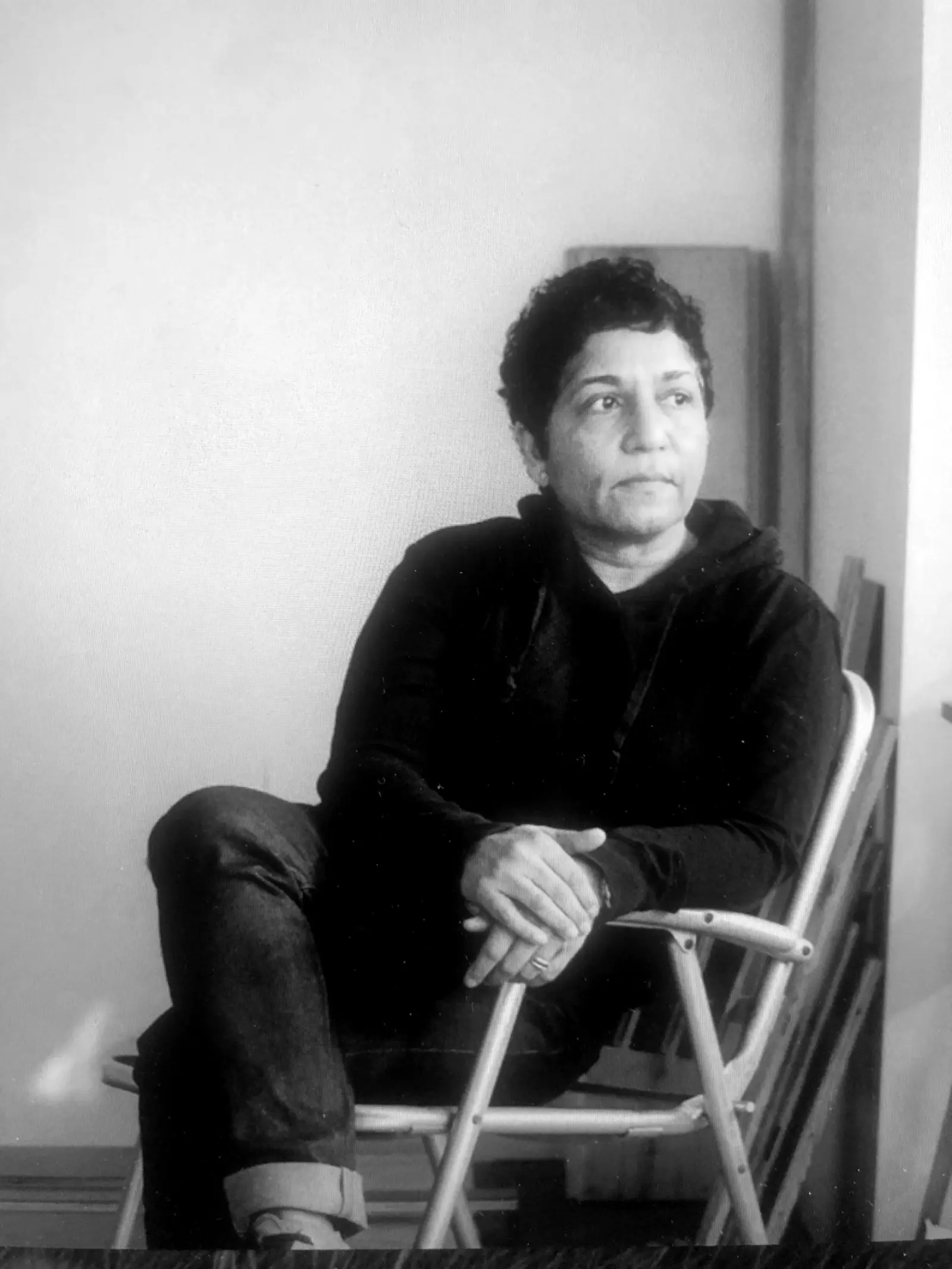
Foto: © Eva Deitch / The New York Times, 2020
Huma Bhabha
(f. Karachi, Pakistan, 1962)
Huma Bhabha er født og oppvokst i Karachi i Pakistan. Som ung flyttet hun til USA hvor hun studerte billedkunst ved Rhode Island School of Design, og fullførte masterutdanning i billedkunst ved the University of Columbia i 1989. Hun bor og arbeider i Poughkeepsie, New York. Bhabha har i senere år befestet sin posisjon som en viktig stemme på den internasjonale kunstscenen. Hun har hatt separatutstillinger ved større institusjoner som MoMA PS1 i New York og Collezione Maramotti i Reggio Emilia, Italia. Hun har vunnet en rekke priser, og arbeidene hennes er å finne i samlinger som Centre Pompidou, Paris, Hirshhorn Museum and Sculpture Garden, Washington, DC, The Metropolitan Museum of Art, New York, The Museum of Modern Art, New York, Tate, London, og Whitney Museum of American Art, New York, for å nevne noen. Hun oppnådde bred anerkjennelse i 2018 for installasjonen We Come in Peace på The New York Metropolitan Museum of Art sin takterrasse. Det er denne installasjonen som har fått sin plass i Ekebergparken, i starten av Spettestien.
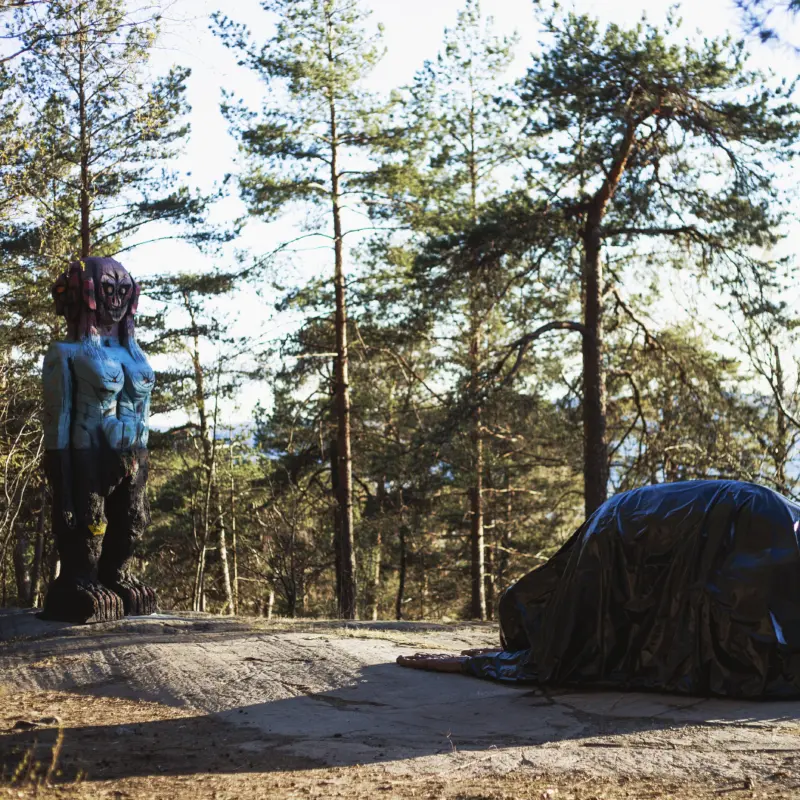
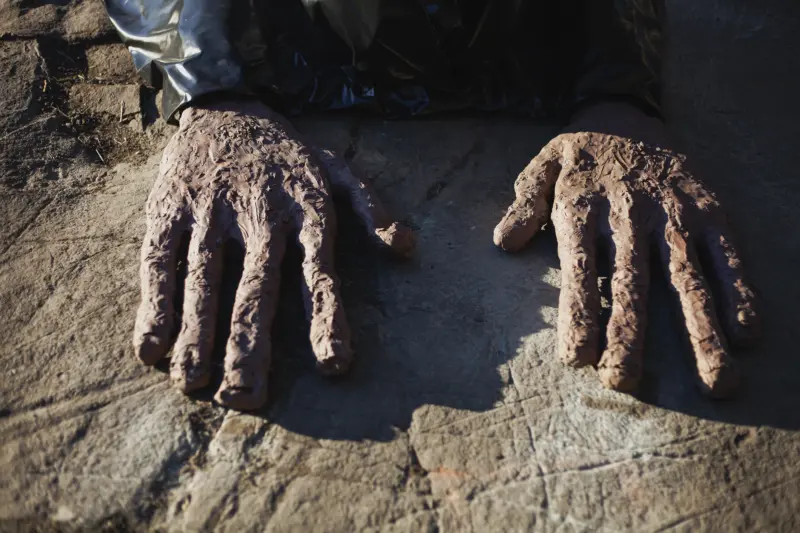
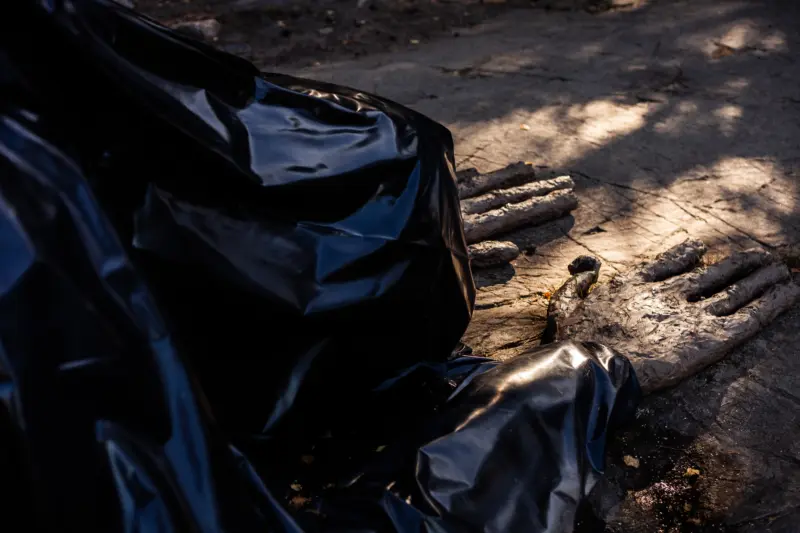
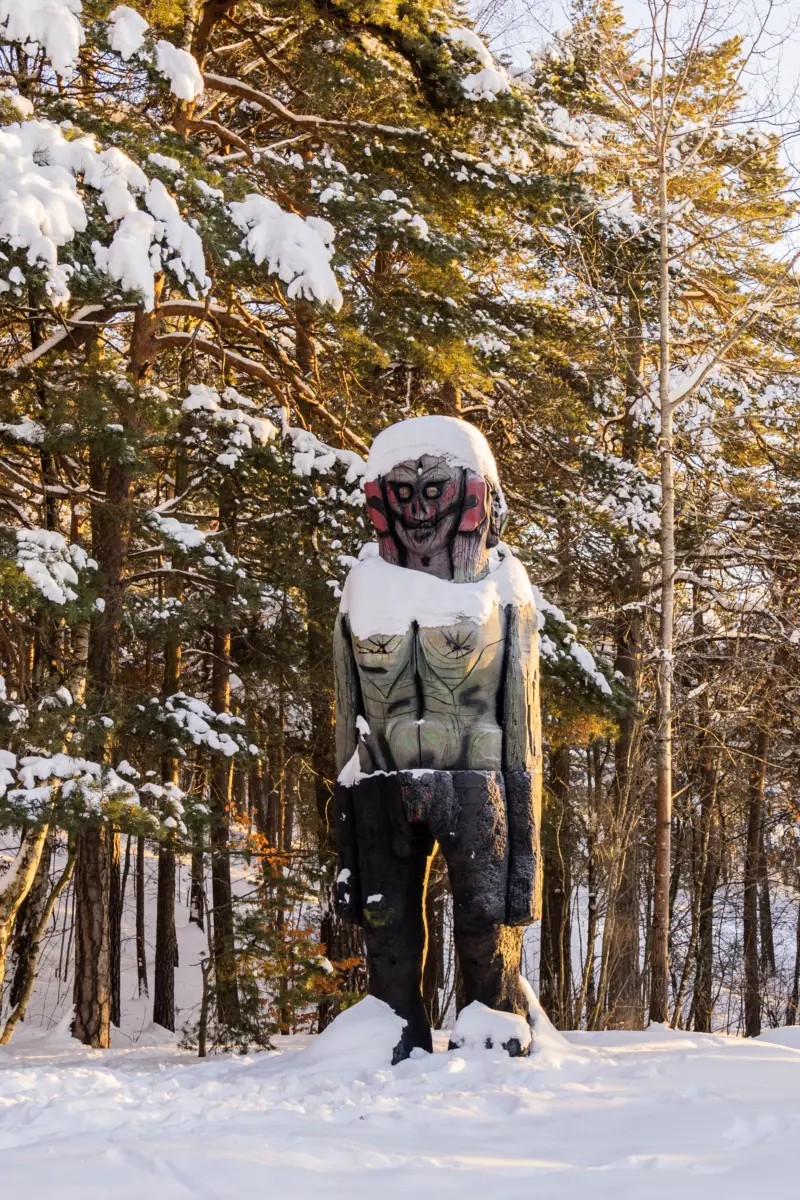
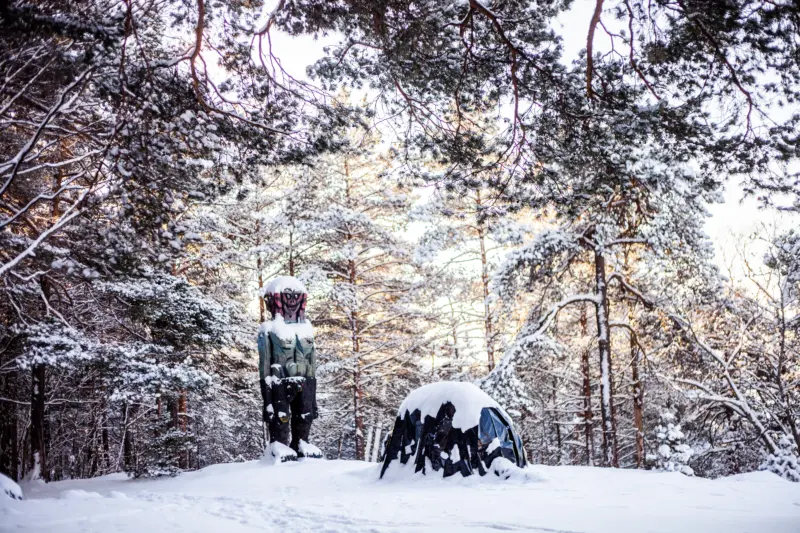
We Come in Peace is an installation consisting of two figures placed towards each other. One is lying prostrate to the ground, the other standing. The lying figure is titled Benaam, which is urdu and translates into «nameless». The figure is covered by something that looks like a black rubbish bag or a tarpaulin. The hands that stick out from under the cover are huge in comparison to the body and from the back of the sculpture protrudes something tail-like or possibly even excrement. The standing sculpture shares its title with the installation. Here we are presented with multi-gendered and several-headed figure. It has some human attributions, but it appears to be something alien. Bhabha takes these two figures and places them as actors on a stage. What exactly is going on between them?
Bhabha’s art has many references to science fiction, horror and pop culture in addition to art historical eras and movements such as the classical and archaic eras, indigenous art, expressionism and the art brut movement. By indiscriminately mixing elements from pop culture and high culture, Bhabha creates artwork that is described as fascinating, challenging and relevant, leaving the viewer with many possible interpretations. As a sculptor she is self- taught, mainly working in bronze, clay, wood, cork, styrofoam and other found materials.
The title We Come in Peace, is a direct reference to the science fiction film The Day the Earth Stood Still from 1951, directed by Robert Wise. The aliens in the film tell us that they come in peace, but as Bhabha points out, it is human nature to fear the unknown. The humans in the film respond by mounting an attack.
The tension between the two figures is ambigious. Are we witnessing a meeting between a worshipper and a god? The enforcer and the subjugated? Survivor and deceased? Even though the sculptures are portrayed as something different and unknown, Bhabha insists that this does not necessarily mean something frightening or antagonistic. In this way, the artist challenges the viewer’s own prejudices when confronted with the unknown. Previously, Bhabha has also used Benaam to represent the civilians murdered in the wars in Iraq and Afghanistan.
Benaam, without name, was always for me a monument to the unnamed victims of ongoing conflict. The black covering is literally a plastic bag covering a body that has expired. The hands stretching out from under the plastic signal a last movement, as does the refuse or tail of rubble, a final expulsion. (...) the standing five- headed intersex figure, is responding to being summoned by Benaam. They obviously don’t look human in scale or presence, so the scenario between them is open to the imagination. For me, it’s an antiwar statement, but I don’t want to limit the work to one interpretation.
- Huma Bhabha
Omvisninger
Opplev We Come in Peace og de andre kunstverkene i samlingen med våre kunstformidlere. Vi tilbyr skreddersydde omvisninger i parken hele året.